
Remembering Anne Frank
The darkest chapter in history from the POV of an innocent teenage girl

On March 28th, 1944 the Minister of the Dutch Government in exile, Gerrit Bolkestein, gave a speech. He called upon the people of the Netherlands to keep journals, diaries, and correspondences so that the atrocities and oppression of the Third Reich could be made public.
Listening to that speech was a teenage German-Jewish girl named Anne Frank who had been keeping a diary for almost 2 years. Resolved and inspired she went through and began to make edits to publish what she wrote after the war ended. Though she never saw her diary published, it would become one of the most powerful pieces of literature ever to exist.
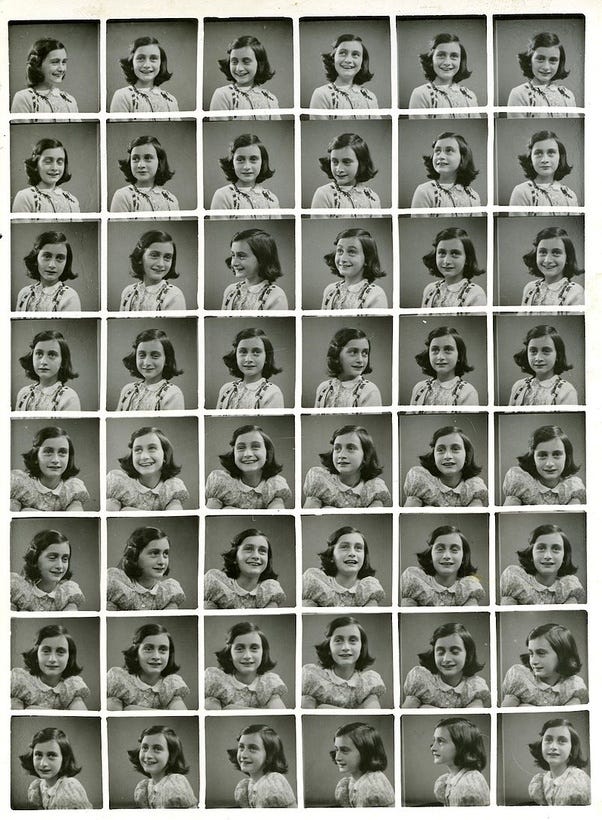
Annelies Marie "Anne" Frank was born in Frankfurt in June 1929. The 2nd daughter of Otto and Edith Frank she grew up in relative comfort and ease with her older sister Margot. On June 12, 1942, for her 13th birthday, she was gifted a diary by her parents. Red and white with a checkered pattern the diary became a part of her life as she mused on friendship, family, and life as a teenage girl.
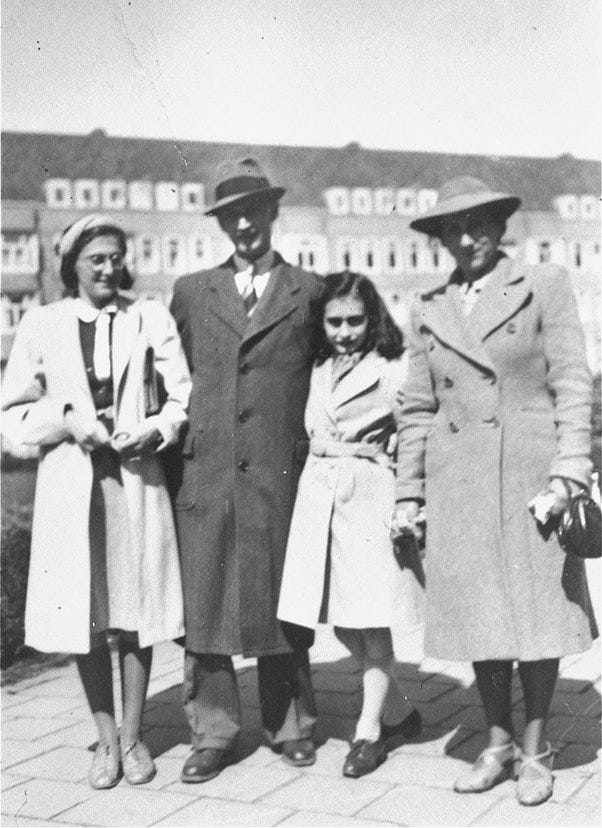
By 1942 the Frank family had moved from Germany to the Netherlands to escape Hitler (they had moved there years earlier in the 1930s). They were safe there for years and Anne learned Dutch. Then the Nazis conquered the Netherlands and suddenly there was no escape for the Frank family.
In mid-1942 the Nazis began rounding up Jews in the Netherlands. The Frank family planned to go into hiding on the 16th of July, 1 month and 4 days after Anne received the diary. Then on July 6th bad news struck as Anne’s older sister Margot received a “call up” letter from the Zentralstelle für jüdische Auswanderung (Central Office for Jewish Emigration- controlled by the SS). Now realizing they were on the radar, the Franks immediately went into hiding. They departed for the “Achterhuis” or “annex” where they could wait out Hitler for years if need be.
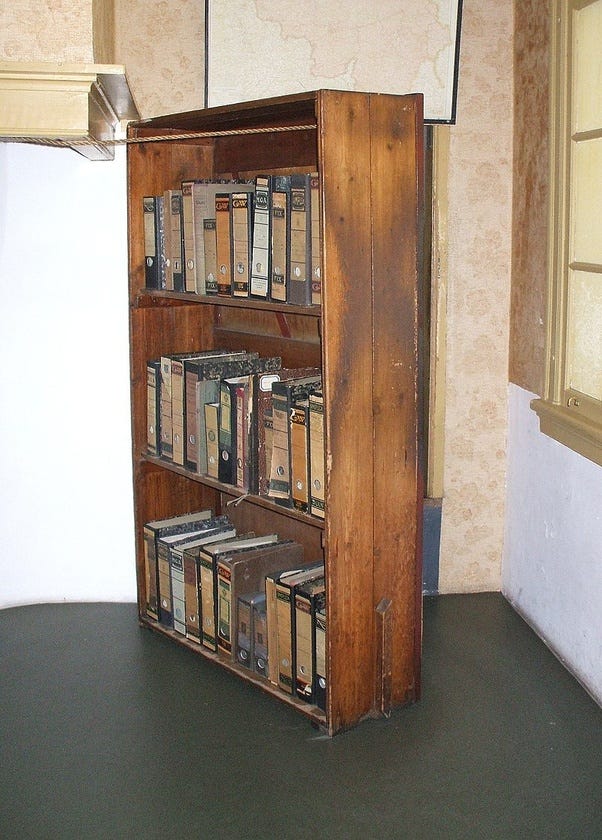
The space itself was relatively large and not the tiny attic many imagine. Well concealed it was the perfect hiding place for the family. Trusted confidants such as Miep Gies, Victor Kugler, Johannes Kleiman, and Bep Voskuijl kept the family supplied with essentials while they set about living their lives confined to this 3-floor apartment/home/hiding place. They were soon joined by the Van Pels family. made up of Hermann Van Pel and his wife Auguste with their 16-year-old son Peter. Then finally the last member of the group was Fritz Pfeffer, a German-Jewish dentist also fleeing the Nazis

In the annex, Anne did most of her writing. In one of the first entries from Sunday, June 14, 1942- about 3 weeks before the family went into hiding- Anne wrote in part about her friends.
“Afterwards (her Birthday at school) they all danced and sang around me. When I got home Sanna was already there. Hannah came home with me after gym class…. Hannah and Sanna used to be my best friends. They used to say there goes Hanna Anne and Sanna”.
Hannah Pick-Goslar was a very close friend of Anne’s at school.
What makes Anne Frank so special is the connection it creates. It chronicles the horror Jews in Europe faced but through the lens of a real, relatable person. Anne’s choice to write as though it is a conversation, speaking to the reader, makes it even more powerful. It feels as though Anne is writing to you making the emotional impact hit all the harder.
Anne expresses the misery of living in hiding, the evil actions taken against the Jewish people of Europe, the loss of her friends, and the constant terror of being discovered. Additionally, she writes about conflicts with her mother, her deep love for her father, her jealousy of her older sister, a desire to be her true self, and even her first kiss with Peter Van Pels. She even wonders about the nature of her love for Peter. Is it real or due to her lack of options in the annex?
It is powerful, beautiful, and authentic. I love an academic overview of the Third Reich as much as the next historian but the “realness” of Anne’s writings makes it something that humanizes the victims of the Holocaust in a very real way.
On Saturday July 15th, 1944 Anne Wrote
“It's really a wonder that I haven't dropped all my ideals, because they seem so absurd and impossible to carry out. Yet I keep them, because in spite of everything I still believe that people are really good at heart. I simply can't build up my hopes on a foundation consisting of confusion, misery, and death. I see the world gradually being turned into a wilderness, I hear the ever approaching thunder, which will destroy us too, I can feel the sufferings of millions and yet, if I look up into the heavens, I think that it will all come right, that this cruelty too will end, and that peace and tranquillity will return again.
On August 4th, 1944, a mere 3 weeks after this was written the annex was raided by SS-Oberscharführer Karl Silberbauer and a team of police. All 8 members of the annex were captured and after being questioned and detained, were deported to Auschwitz.
Upon arrival, the men were separated from the women and so Otto was separated from his 2 daughters and wife. Of the 1,019 Jews who arrived at Auschwitz that day, 549 were sent to the gas chambers.
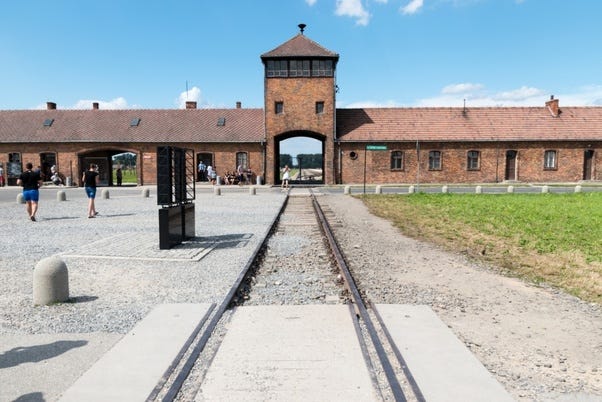
Anne was stripped naked, disinfected, had her head shaved, and was tattooed. Once in the camp, Edith (her mother), Margot (her sister), and Anne were told about the selection process and gassing. Knowing that her father was older Anne believed he had been killed already and mourned as best she could.
While at Auschwitz the now 15-year-old Anne did manual labor for 12–16 hours per day while being fed next to nothing. She developed scabies and eventually both Margot and Anne were quarantined into the “infirmary” where sick people were left to die. Edith Frank stopped eating entirely and would give her meager ration of food to her daughters through a hole in the wall of the infirmary.
Anne recovered and Margot recovered enough not to be murdered and returned to manual labor. In October the 3 Frank women were scheduled to be transported to Bergen-Belsen as the Red Army advanced towards Auschwitz. Edith, having not eaten for weeks so that her daughters would survive, was too weak to travel and was left behind as Anne and Margot were forced onto another train. Edith would die a few days later of starvation and exhaustion.
At Bergen-Belsen, Anne saw Hannah Pick-Goslar- the Hannah that was her “best friend” in that early entry. This happened sometime in January or the start of February 1945. Hannah and another friend of Anne’s also Bergen were shocked at the sight of Anne. The vibrant girl they knew had a shaved head, shivered uncontrollably, and was emaciated. Margot was bedridden and near death, being cared for by the Van Pels who had made it to Bergen also. In the short conversation they had with Anne they learned that Anne knew her parents were dead and no longer had a desire to survive.
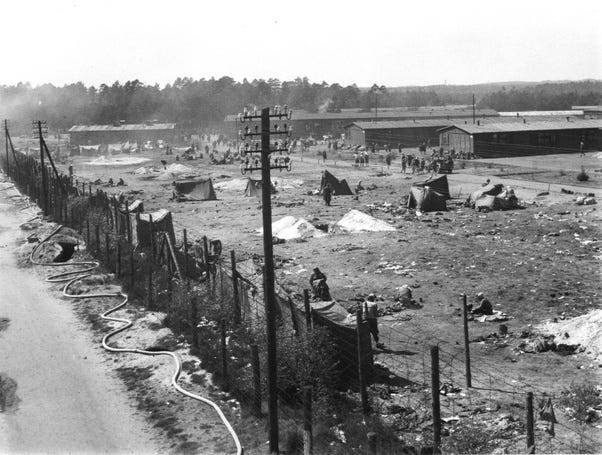
Anne would contract Typhus sometime in February of 1945- about a month before Bergen was freed. She was crammed into the infirmary with other sick patients where they were left to die. Her sister Margot, now deathly ill, fell out of bed and died from the shock of the impact. Alone in the world, emaciated, depressed, and sick, Anne died there in that dark miserable place.
Unknown to Anne during her ordeal Otto had not been sent to the gas chambers and survived. He returned to the Netherlands and was informed that his wife and 2 daughters had died. Additionally, the Van Pels had all died along with Fritz Pfeffer making Otto the sole survivor.
Miep Gies, one of those who had helped hide and support the family, had found the diary of Anne Frank after the annex was raided. She decided to keep it and when she was reunited with Otto she handed him the red and white checkered diary explaining that this is Anne’s legacy.
Indeed it was to be her legacy. The diary would go on to be translated into 70 languages and sell 30 million copies- that was the first version. Anne Frank became one of the most well-known victims of the Holocaust. An innocent teenage girl, a kind loving person, who died alone and sick in a dingy room at only 15.
So that answers the question. The direct answer is that “no” Anne Frank did not “deserve” her fate. It fills me with rage that such a question could be asked. That’s why I chose to write about Anne and her legacy rather than try to argue that a kind teenage girl deserved life.
Did Anne deserve to become an internationally known figure for her writing? Absolutely.
In the immortal words of Anne Frank,
"Whoever is happy will make others happy too"
Never forget.